

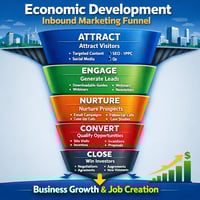
Shift from RFP chasing to a proactive inbound project strategy Inbound project generation for...
Examples: Marketing Campaigns in Economic Development CRM
HubSpot marketing campaigns give economic development organizations one place to coordinate, connect, and measure the assets used to attract investment, support existing businesses, engage investors, and promote programs. A campaign groups related content and tactics—such as emails, landing pages, ads, social posts, blog content, and forms—around one defined goal.[hubspot][knowledge.hubspot]
What it enables
- One connected campaign record: Associate relevant emails, landing pages, blog posts, ads, social posts, forms, and other assets so the team can view the full initiative together.[knowledge.hubspot][knowledge.hubspot]
- Clear accountability: Define the audience, owner, timeframe, budget, core message, and measurable campaign goal before launch. HubSpot’s campaign goals tracker supports setting targets and monitoring progress.[knowledge.hubspot]
- Outcome-based reporting: Review contacts, deals, and deal revenue attributed to campaign assets, then connect marketing activity to meaningful organizational outcomes.[knowledge.hubspot]
- CRM-connected engagement: Capture responses and website activity directly in the same system used to manage companies, contacts, projects, programs, and relationships. Economic Development CRM positions this as an integrated website-and-marketing system that converts targeted audiences into trackable leads.[economicdevelopmentcrm]
Campaigns for EDOs
| Campaign | Audience | Primary goal | Typical assets |
|---|---|---|---|
| Business retention visits | Existing employers, priority industries | Schedule BRE meetings | Email series, landing page, meeting link, form, workflow, follow-up tasks |
| Target-sector attraction | Target companies, site selectors, influencers | Generate qualified conversations or project interest | Sector page, downloadable brief, LinkedIn ads, email outreach, conversion form |
| Sites and buildings | Site selectors, brokers, developers | Generate property inquiries | Property landing page, downloadable profile, video, paid search/social, inquiry form |
| Incentive program awareness | Eligible local companies | Start applications or consultations | Program page, FAQ, application form, webinar, deadline reminder emails |
| Investor/member renewal | Members, investors, sponsors | Secure renewals or meetings | Impact report, renewal page, email series, event invitation, tasks |
| Workforce or talent attraction | Talent prospects, employers, partners | Build awareness and drive signups | Employer stories, relocation content, paid social, newsletter, lead-capture form |
Recommended campaign structure
- State one business objective: For example, “Book 25 BRE visits with priority employers by December 31,” rather than “increase awareness.”
- Define the audience in CRM: Segment by company type, industry cluster, location, relationship owner, past engagement, program eligibility, or project stage.
- Develop one central conversion point: Use a campaign landing page, meeting link, RFI form, event registration, application, or downloadable asset.
- Activate multiple channels: Coordinate email, website content, social, ads, direct outreach, partner distribution, and event activity around the same message.
- Automate the next action: Create a task, assign an owner, alert a project manager, enroll a nurture path, or update the relevant record when someone converts.
- Report on decisions, not vanity metrics: Track visits booked, project inquiries, RFI responses, applications begun, investor renewals, employer follow-ups closed, and ultimately jobs, investment, or other mission outcomes.
HubSpot allows teams to add existing or newly created assets to a campaign, which makes the campaign record the practical organizing layer rather than a separate planning spreadsheet.[knowledge.hubspot]
Example: BRE visit campaign
Campaign name: 2026 Q4 | Priority Employer BRE Outreach
- Goal: Book 25 visits with employers that have not received a BRE visit in the past 12 months.
- Audience: Contacts at priority employers, segmented by industry cluster, employee count, visit history, and assigned relationship manager.
- Offer: “A confidential 30-minute check-in to identify workforce, expansion, infrastructure, permitting, and incentive needs.”
- Assets: Program webpage, dedicated scheduling landing page, three-email invitation sequence, LinkedIn posts, a partner toolkit, CRM task workflow, and a dashboard.
- Success measures: Meetings booked, meetings completed, issues identified, follow-up actions created, actions closed, and expansions or retained jobs influenced.
Economic Development CRM describes marketing campaigns and KPI tracking as part of an integrated approach for attracting targeted audiences and converting them into trackable leads.[economicdevelopmentcrm]